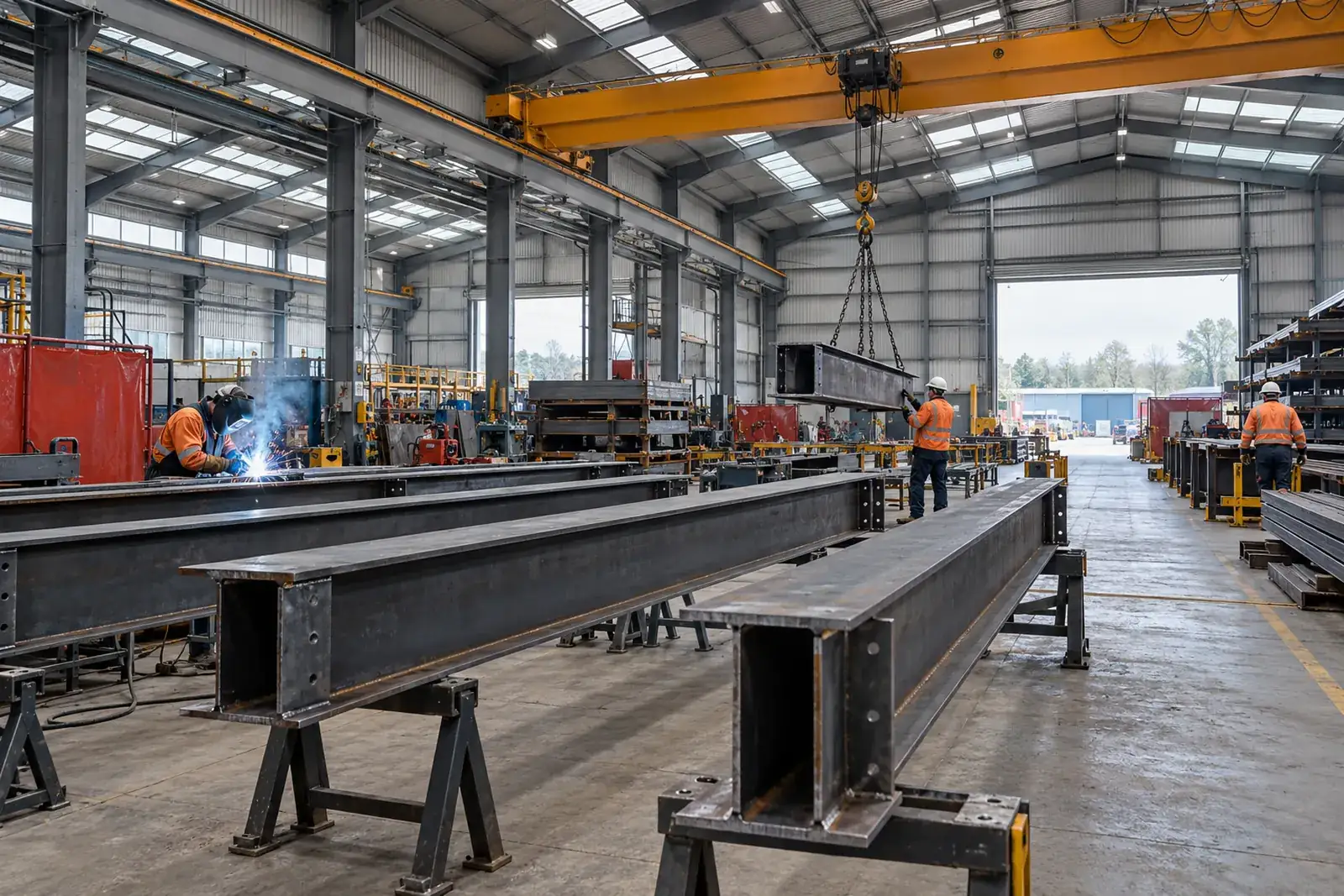
Sections, Plates And Supports For Leicester Businesses
Steel fabrication combines cutting, drilling, fitting and welding to turn stock material into useful components. For commercial buyers, the important starting point is what the finished item must do, where it will sit and how it will connect to existing work. A sketch can explain the idea, but dimensions, loads and fixing details need resolving before manufacture.
Our enquiry route covers brackets, baseplates, support frames, secondary steelwork and coordinated fabrication packages. Tell us whether you need loose components for your own assembly or finished items delivered ready for installation. Separating those requirements early makes quotations easier to compare and reduces uncertainty over who provides bolts, anchors and protective finishes.
When Fabrication Is The Right Route
Purpose-made steelwork can suit a factory alteration, commercial refurbishment or contractor package where a stock product will not fit. It is also useful when several components need consistent hole positions, a defined assembly sequence or interfaces with equipment supplied by another manufacturer. The specification should explain those interfaces rather than leaving them to interpretation.
For replacement items, send photographs of the existing arrangement and explain why replacement is needed. Wear, corrosion and altered loading may mean that copying the old part is inappropriate. Where a component supports a building or carries a safety-critical load, a competent designer must establish the design before the fabrication details are released.
From Drawing To Workshop Release
First, we review the intended use, available drawings and outstanding decisions. The quotation scope should identify material grade, section sizes, quantities, weld requirements and finish. An enquiry drawing should be distinguished from an approved manufacturing drawing so that an early estimate is not mistaken for authority to start cutting.
Next, dimensions and interfaces are checked against an agreed datum. Hole centres, end clearances and the sequence of assembly matter as much as overall length. Any changes should be recorded against a drawing revision, with responsibility for approval stated before material is ordered or production is released.
Fabrication then follows the agreed cutting, drilling, fit-up and welding sequence. Dimensional checks and the specified weld inspection belong within that sequence, before coatings hide the surface. Delivery identification should allow components to be matched to the drawings, particularly where several similar items are supplied.
Standards Follow The End Use
Load-bearing construction components can fall within the scope of BS EN 1090-1, while BS EN 1090-2 addresses technical execution requirements for steel structures. Applicable conformity documentation and the required execution class need checking against the actual project. A decorative cover and a structural beam should not be treated as the same compliance exercise.
Welding fume is covered by the Control of Substances Hazardous to Health Regulations 2002. HSE guidance calls for suitable exposure controls, including local exhaust ventilation and respiratory protection where needed. Where installation is construction work, responsibilities under the Construction (Design and Management) Regulations 2015 also need allocating between the parties.
Specify The Finish Before Pricing
The environment determines the finish. Steel used inside a dry plant room faces different conditions from an exposed external support or a component subject to cleaning chemicals. Describe moisture, abrasion, temperature and appearance requirements so that surface preparation and coating choices can be assessed together.
Allow for how the finish affects fit. Coating thickness can influence holes, mating faces and threaded features, while areas that will be welded on site may need a different treatment. Identify cosmetic surfaces, masked areas and any touch-up work in the scope rather than assuming every surface needs the same preparation.
What Changes The Fabrication Cost
A tonne of simple sections takes different workshop time from a tonne of intricate assemblies. The number of separate parts, complex weld preparation, access for welding, inspection requirements and repeated handling can have a large effect on workshop time. Small batches carry their own setup work, while a repeat batch may benefit from agreed jigs and a stable drawing revision.
Delivery, unloading and installation should be priced as distinct responsibilities. Explain vehicle access, available lifting equipment and any restrictions on when materials can arrive at your Leicester premises. A useful quotation states what is included, what is excluded and which design decisions must be closed before a programme can be agreed.
Check The Handover Scope
Before accepting a fabrication package, agree how items will be identified and which records accompany them. A marked drawing, component list and agreed inspection evidence can help the receiving team check that the delivered parts match the order. Record shortages or damage before materials are distributed around the site.
For repeat components, retain the approved drawing revision and the dimensions used for acceptance. Later orders should refer to that information and identify any change in finish, material or quantity. A previous quotation should not be treated as confirmation that a revised item has the same scope.