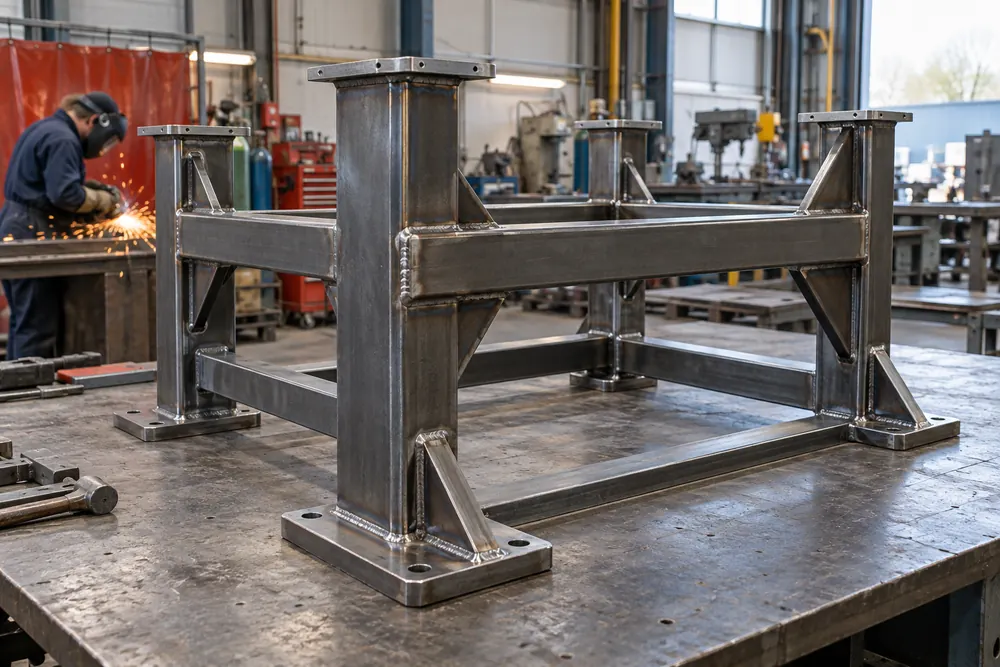
Start With Function, Then Select The Material
Metal fabrication is a broad route for creating frames, brackets, supports and assemblies used across commercial premises. Steel is often suitable, but stainless steel or aluminium may be worth considering for a particular environment or handling requirement. Material selection should follow the duty, loading and exposure rather than a preference based only on appearance.
For Leicester manufacturers and facilities teams, useful enquiries describe the operating problem first. An equipment support may need adjustment, a trolley may need to pass through a restricted route, or a frame may need to interface with an existing machine. Explain these constraints before committing to the final geometry.
Typical Commercial Fabrication Requirements
Fabricated frames can provide mounting points for equipment, support ancillary items or organise assemblies within a production area. Plates and brackets can resolve interfaces between proprietary products and an existing structure. Each item needs a clear division between what the fabricator supplies and what the equipment manufacturer or installation contractor provides.
Alterations to machinery deserve particular care. Adding a support, enclosure or guard can affect maintenance access, stability and the way equipment is used. Involve the responsible engineer or machinery supplier when a modification could affect safe operation, rather than treating the new component as an isolated metal part.
How A Fabrication Enquiry Develops
First, gather dimensions, photographs and the intended duty. Include the route by which the assembly will reach its final position, since a part that fits in use may still be too large for a doorway or service lift. Note any surfaces that must remain accessible after assembly.
Second, agree a drawing with material, connections and the important fit dimensions. Assemblies with several mating parts may benefit from locating features or a trial fit. Make the approval process clear, including who can accept a change and how the latest drawing revision will be identified.
Third, manufacture and inspection follow the agreed specification. The appropriate cutting, forming and joining methods depend on the chosen materials and details. Check the completed assembly before coating where possible, and define which dimensional or functional checks need recording before dispatch.
Joining Different Materials
Not every metal can be joined using the same welding process or preparation. The material, thickness, joint geometry and required finish determine the procedure. For mixed-material assemblies, a mechanical connection may be more suitable than a welded connection, subject to the design and operating conditions.
Contact between different metals in the presence of moisture can create corrosion concerns. Isolation details, drainage and compatible fixings may need to be designed into the assembly. Explain the environment and maintenance access so that any protective measures can be considered before the component is made.
Safety Requirements Are Specific To The Use
The Provision and Use of Work Equipment Regulations 1998 require work equipment to be suitable and safely managed. A fabricated item used with machinery should be considered within that equipment’s risk assessment. Guarding, trapping points, sharp edges and access for cleaning or maintenance should be addressed as part of the design.
Where an assembly becomes a structural construction component, BS EN 1090-1 and the relevant execution requirements may apply. This is different from a general workshop frame with no structural building role. Welding also needs suitable COSHH controls, including management of fume exposure, with additional site controls where hot work takes place in occupied premises.
Finishes, Costs And Delivery Scope
For internal dry environments, an agreed paint system may be appropriate, while other applications call for a different protective approach. Stainless items may need weld cleaning and a specified surface finish. Describe any cleaning chemicals, outdoor exposure or contact surfaces that could influence the choice.
Cost depends on material availability, part count, fit-up time, weld access, finish and inspection. For Leicester deliveries, specify the unloading equipment and the route each assembly must take to its fixing position. Send your Leicester site details, preferred quantity and programme, and distinguish an initial concept from a fully approved design so that the quotation reflects the actual stage of the project.
Acceptance Beyond The Workshop
Consider how the item will be checked in its final position. Equipment mounting points, clearances for servicing and the route for removing a replaceable component may need a trial assembly before the finish is applied. State which mating parts will be available and who approves the result.
For recurring orders, identify parts with a drawing number and revision rather than a verbal description alone. Keep a record of agreed material substitutions and finish changes. This makes a later replacement easier to define and avoids relying on an old photograph to explain a small but important detail.